

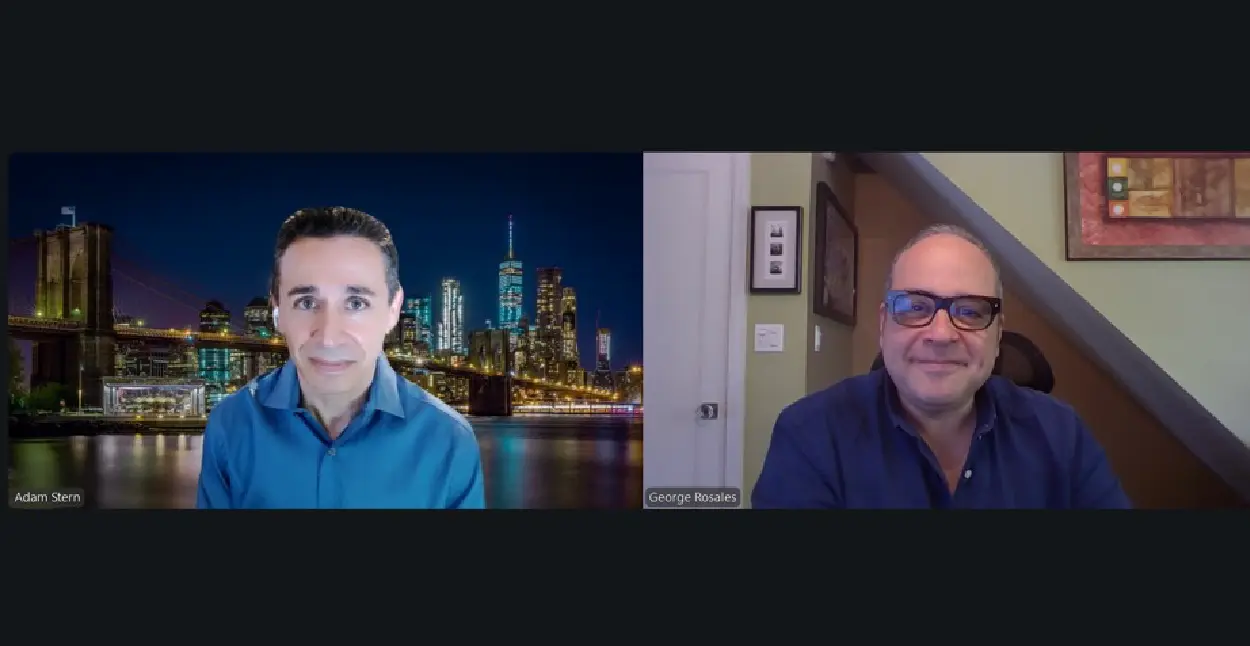
Workforce Voices: a conversation with Adam Stern
Adam Stern has spent 30 years helping people find their next opportunity in healthcare. What keeps him going, and what he wants candidates to know right now.
There is a moment Adam Stern loves about his work. It happens on the phone, usually out of nowhere.
He has tracked down a candidate, someone not actively looking, maybe settled into a role that is fine but not great. He tells them about an opportunity. And something shifts in the conversation.
“This one phone call I can make to a person could really change their life,” he says. “It could change how they’re living at home, how long it takes to get to and from work. It could enhance their career and their family life. I feel like I’m a part of that, and it makes me very happy.”
That pull has kept Adam in healthcare recruiting for three decades. He has watched the industry change, watched the job market tighten, watched the way people navigate a search evolve in ways both good and complicated. Through all of it, the thing that hasn’t changed is what he believes makes a career last.
“Focus on relationships over transactions,” he says. “You take care of people, business always flows.”
He didn’t plan this. His wife did.
Thirty years ago, Adam was the assistant manager of a group home for people with developmental disabilities. He was good at his job and genuinely cared about the people in his care. His then-fiancée worked at a search firm and came home one day convinced he had the right instincts for this kind of work. He didn’t even know what she meant.
“Recruiter? What am I recruiting?” he says, laughing reflecting on how little he knew about it at the time.
Being a curious person, he learned of an opportunity to become a recruiter and went after it. After the interview, he had a much better understanding of what his wife had been talking about. He liked people, liked talking to them, and liked the idea of helping them along the way. It sounded like the best of both worlds: do the work well, and you make a good living while helping another person in their career.
Recruiters sit at a unique intersection in the workforce. They aren’t employers and they aren’t job seekers, but they are essential to both. When an organization can’t find the right person for a critical role, a recruiter is often the bridge, built on years of relationships, referrals, and a real understanding of what each side actually wants. That’s what keeps a workforce functional and helps people find work that fits.
Adam built his career in healthcare recruiting at Executive Health Search, the retained search division of The HealthSearch Group, a family-run firm that has been placing healthcare talent since 1961 and is now in its third generation of leadership. He moved into the parent organization as Executive Vice President in 2019.
Through the years, people he has helped find work have sent him cards, texts, and small gifts just to say thank you. People who he has directly placed in roles that have changed their life, their income, and their career trajectory. That feedback is priceless to Adam.
Why he still picks up the phone
Healthcare organizations come to Adam when a role has gone unfilled too long. His firm works across the full range, from physicians and nurses to finance leaders and C-suite executives, in hospitals, nursing homes, community health centers, and home care organizations.
For Adam, a successful placement isn’t measured at the offer. It is measured two years later, when someone is still there, still growing. Getting to that outcome requires more than a well-matched resume. It requires a real conversation.
“Nothing better than getting on the phone and speaking to somebody,” he says. “Email and tools help. But a real conversation tells you things a resume never will. You hear hesitation. You hear excitement. You get a sense of who someone actually is. That’s what makes or breaks a potential match.”
In an era when sequencing tools, databases, and AI can do a lot of the early lifting, Adam’s instinct is still to call. He has 30,000 LinkedIn connections and runs healthcare communities with tens of thousands of members. The reach is real. But what converts, he will tell you, is still the conversation.
What gets you the offer is not what makes it last
Healthcare hiring is tighter than most candidates realize. Facilities are stretched between rising salary demands and budgets that have not kept pace. According to the American Hospital Association, hospitals are facing a projected shortage of up to 124,000 physicians by 2033, with demand outpacing the supply of workers at nearly every level. Organizations are prioritizing clinical roles tied to direct patient care, and operational positions, directors, managers, the people who run the business side of a facility, are being consolidated or left open longer.
In that environment, how a candidate conducts themselves during a search matters more than most people account for.
Adam has seen candidates lose ground by going silent mid-process. He has also seen candidates rise by doing the opposite. A same-day follow-up. A quick note when plans change. Basic responsiveness when an offer comes in.
“People always remember how you handle things,” he says. “If I’m calling you, there’s a reason. All I ask is, if you’re not free, get back to me when you can. Just help me to help you.”
He also sees candidates focus too narrowly on the salary number without asking harder questions. Culture fit, growth path, what a full benefits package actually means for their financial future. Chasing the biggest offer without doing that work leads to short tenures and a resume that tells a story candidates don’t always intend to tell.
Zoom has made the interview process faster and more accessible, which Adam sees as a genuine improvement. But he is honest about the trade-off. “The candidates who stand out right now are the ones who bring the same energy to the screen that they would bring walking into a room,” he says. “An organized background, good lighting, camera on, a smile, and follow up the same day. And if you change your mind about a role, say so. A short honest message is always better than silence.”
What his father taught him about doing hard things well
The best career advice Adam ever received came from his father, on a night when he was in his twenties and dreading the next morning.
He had to let someone go at the group home. The person had a family and commitments and Adam knew it would be hard. He sat with his dad that night, visibly upset, and his father asked what was wrong. Adam explained the situation. His father did not pretend it would be easy. He said it was never going to feel good to have to deliver tough news to someone, and that was just true. What he said next stuck with Adam more: this was still Adam’s job to do, and not liking it did not excuse him from doing it well. Being good at this kind of work, his father told him, meant being the one who could deliver hard news and still treat someone with respect on the way out the door.
“I still felt horrible afterwards,” Adam says. “But it just rang to me. And since that point, when I’ve had to do uncomfortable things in my career, it’s helped me. I always think of my dad in those moments.”
That lesson has traveled with him through three decades of delivering difficult news, navigating negotiations that fall apart, and maintaining relationships through outcomes that don’t always go the way anyone planned. Being a professional, he learned, means delivering the bad news as well as the good, and the difference is in how much care you put into the delivery.
Thirty years in, he still picks up the phone. Still asks candidates what they actually want. Still measures success by who is standing two years later, in a role they are glad they took.
Tools can search faster than Adam ever could alone. They can’t make a candidate feel heard, and they can’t make an employer sound like a place worth joining. That’s still the job, the part no platform replaces: the person on the other end of the call, and whether they believe you.
“Anybody can use the tools out there now,” he says. “What people remember is how you handled them. If people see you as someone they can trust, that’s everything.”
Adam M. Stern is Executive Vice President at The HealthSearch Group. He credits relationships built on trust and confidentiality as the foundation of every successful placement.
This conversation is part of Workforce Voices, a series by BOUNCE highlighting the stories of people working across workforce and economic development ecosystems.
#humansforhumans