Workforce Voices: a conversation with Katherine Sanchez
Katherine Sanchez grew up translating for her mother in hospital waiting rooms. Now she builds the pathways that nobody built for her, so the next generation of healthcare leaders doesn’t have to figure it out alone.
Katherine Sanchez was 15 years old when she became her mother’s translator during a health crisis at the hospital.
She didn’t know the medical terms. She wasn’t prepared to deliver news no teenager should have to deliver. But she was there, standing between her mother and a healthcare system that didn’t speak her language, literally or figuratively. More than a decade into her healthcare career, she still carries that memory. “I never want somebody to feel the way I felt,” she says. “Powerless. Helpless.”
That moment planted a question she’d carry into adulthood: how do we make sure people are seen?
She came in wanting to be a nurse. A failing grade changed the plan.
Katherine didn’t start out aiming for healthcare administration. Growing up in Queens as a first-generation immigrant, she saw how healthcare disparities played out in her community. People who worked hourly jobs couldn’t afford to take time off. Language barriers delayed care. Her own family’s experience showed her the cost of those gaps.
So she enrolled in college, ready to become a nurse and make a difference on the front lines. Then anatomy and physiology had other plans. “My professor looked at me and said, ‘You don’t really get this, do you?” Katherine recalls. “And honestly? She was right. The spark wasn’t there.”
When your entire plan depends on passing a class and you don’t pass it, that’s disorienting. Katherine didn’t know what to do next.
Her aunt sat her down at the kitchen table. She printed out degree requirements for every health-related major she could find. Together, they went through Katherine’s transcript, class by class, credit by credit, and mapped out what could still count toward something else. It wasn’t a quick fix. It took time, spreadsheets, and hard conversations about letting go of Plan A. But slowly, a new path emerged: health science, with a focus on administration. “Failure is redirection,” Katherine says now. “I failed so much, I got good at it.”
Thirteen years in, she sees a gap that’s getting wider
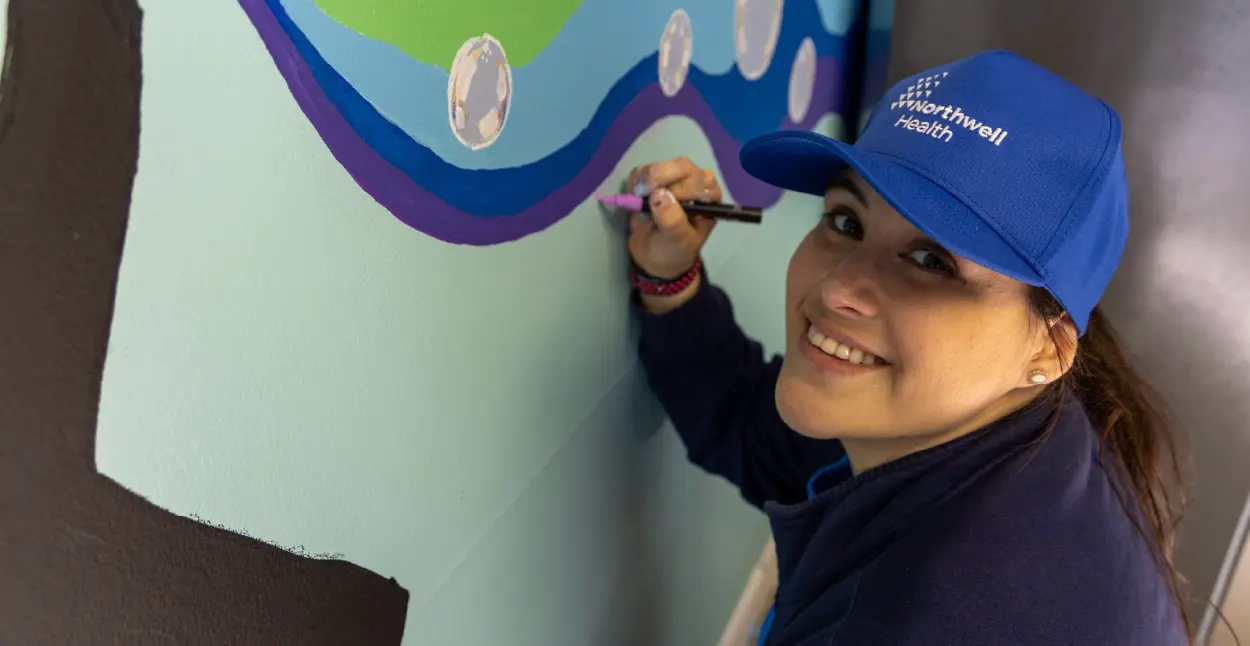
Today, Katherine is a program manager at Northwell Health’s Institute for Community Health and Wellness, where she’s spent 13 years. Katherine manages the Follow Your Heart program, a post-discharge home care program for cardiac surgery patients that provides early in-home clinical visits and 24/7 access to a dedicated care team to help reduce preventable hospital readmissions.
But her day job is only part of the story. As co-chair of the Higher Education Network at Healthcare Leaders of New York (HLNY), Katherine volunteers her time mentoring early-career healthcare professionals, many of whom are navigating barriers she once faced herself. And right now, those barriers are growing. “The number of opportunities hasn’t kept pace with the number of graduates coming out of these programs,” she says. “Potential has never been an issue. Access is.”
Columbia University recently paused recruitment for its Administrative Healthcare Fellowship Program. Other health systems have quietly reduced the number of fellowships they offer each year. Budget cuts mean fewer paid internships at exactly the moment when more graduates need them.
The math doesn’t work. More master’s programs are graduating healthcare administrators. Fewer entry-level opportunities exist to gain the experience employers demand. Katherine knows that gap firsthand. “How do you get experience without having experience?” she asks. “People say, ‘That’s when internships come in.’ Yeah, but if there’s no internships available, how do you still get experience? And how do you do it as a working parent?”
When Katherine was earning her degree, she couldn’t afford to quit her full-time job, the one that provided health insurance for her and her child, to take an unpaid internship. The traditional pathway didn’t work for her. It doesn’t work for a lot of people. According to the Bureau of Labor Statistics, healthcare and social assistance is projected to add more jobs than any other sector through 2033. The pipeline of graduates is growing. The on-ramps into the field are not keeping pace.
So she’s building alternatives.
She’s building the on-ramps that didn’t exist for her
The Higher Education Network partners with 18 partner schools across New York (HEN schools) to bridge the gap between classroom and career. They start with a needs assessment. Katherine asks students directly what they need. The answers: career pathway education (what’s the difference between a fellowship, an internship, and a residency?), networking access, scholarship information, and real-world experience before graduation. “I wanted to be the one to help people get fishing rods,” she says, referencing Trevor Noah’s twist on the old proverb. “Not just give them advice, give them the tools they actually need.”
Those tools include stretch assignments, project work that builds skills without requiring someone to quit their day job. Committee involvement that gives students real responsibility and something concrete to put on a resume. Introductions to sponsors who can open doors. Peer mentorship that demystifies the unwritten rules of the field. “I never want to hear somebody say, ‘Nobody told me that,’” Katherine says. “So we put it on a plate for them.”
The approach works. Evelyn came to Katherine in 2024, panicked. She couldn’t find an internship. Graduation was approaching. Katherine told her to keep showing up: to events, to committee meetings, to networking sessions. She connected Evelyn to the Sandra Lindsay Foundation for an internship, then to Northwell for a patient experience role. Evelyn just accepted her first full-time position out of her bachelor’s program.
Andrea was a fellow medical staff coordinator when Katherine met her. Katherine later mentored her during her fellowship, connecting her to stretch assignments across departments and project management work she could take on without leaving her day job. Within three years, Andrea moved from coordinator to associate project manager to project manager. She’s now a director. “You can get the fellowship experience, you can get the internship experience, if you know who to network with and you have the right sponsors,” Katherine says. “That’s what I try to envision at HLNY. It’s not just limited to events. It’s an opportunity for you to get the hard skills and the soft skills, so by the time you look for your next opportunity, you feel empowered and confident.”
The best career advice she ever received
Katherine has a favorite piece of career advice, one she got from Shari Jardine during an internship with Northwell’s Department of Global Health: ask for advice, and get paid twice. The idea is to ask people for their perspective rather than their help getting a job, to listen and learn from their experiences, their mistakes, their challenges, and let the conversation itself be the return. “Failure is inevitable,” she says. “But what you can do is learn from people’s experiences. Build your own mental safety net from there so that you can continue to thrive.”
It’s a philosophy born from experience, her own and the dozens of early-career professionals she’s mentored since. Healthcare is full of difficult moments and closed doors. Katherine has learned how to fail, how to ask for help, and how to build pathways when the traditional ones aren’t available.
She’s handing out fishing rods, one stretch assignment at a time.
Katherine Sanchez is co-chair of the Higher Education Network at Healthcare Leaders of New York and a program manager at Northwell Health’s Institute for Community Health and Wellness.
This conversation is part of Workforce Voices, a series by BOUNCE highlighting the stories of people working across workforce and economic development ecosystems.
#humansforhumans