
Workforce Voices: a conversation with Lance Chaney
Braun Brush Company has been building skilled tradespeople on Long Island for a century and a half. Lance Cheney didn’t invent the model. He inherited it, refined it, and keeps it running.
There’s a team member at Braun Brush Company who came from warehouse logistics. No background in manufacturing, no engineering degree, and no experience making brushes. Today, that same person operates advanced production machinery, runs nearly every piece of equipment in the shop, helped engineer a brush built to clean the bottom of an oil well 10,000 feet underground, and mentors new employees on craft and process. By Braun Brush’s own internal designation: a Master Brush Maker.
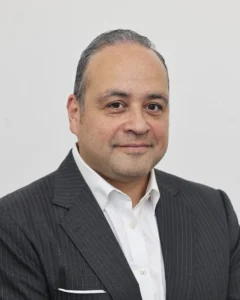
Lance Cheney is the fourth-generation team leader at Braun Brush Company, a Long Island-based specialty manufacturer that has been in continuous operation for 150 years under the same family. His son Max is the fifth. Lance tells that story not as an exception, but as proof that their model works. Across those 150 years, the company has been quietly doing what workforce professionals now spend entire careers trying to build: a structured, sustainable pathway from entry-level to mastery. It just never called it workforce development.
How a specialty manufacturer competes when price isn’t the answer
The conversation around domestic manufacturing has gotten louder recently. Tariffs, supply chain disruptions, and a growing push to bring production back to American soil have put small and mid-sized manufacturers in an unfamiliar spotlight. For companies like Braun Brush, the moment is both validating and clarifying.
Lance is direct about the economics. Making products in Nassau County, Long Island isn’t a cost advantage. Overseas producers can buy the same equipment and pay a fraction of the labor cost. So Braun competes differently. The company makes brushes most people will never see: not hairbrushes or paintbrushes, but thousands of specialized products built for industrial processes, pharmaceutical production, and applications so specific that no catalog product exists to solve them. Roughly 60 percent of what Braun produces today is built from scratch for a specific customer problem, and that number continues to grow.
That kind of work requires people who can think, adapt, and solve. Which is exactly why how Braun develops its people matters as much as what it makes.
The progression framework they built from the floor up
New employees enter at the finishing stage, handling the final steps before a product ships. It’s a deliberate choice. Starting at the end of the process gives someone an understanding of everything that came before them. From there, growth follows demonstrated aptitude and interest, not tenure or credentials.
The company uses seven different production methods. Each has its own learning arc: operator, mechanic, technician. An operator loads, runs, and monitors a machine. A mechanic can set it up, change it over between jobs, and handle routine maintenance. A technician can take a product that has never existed before and figure out how to make it. When someone reaches technician level across multiple methods, they earn the title of Master Brush Maker. “It’s a level of pride,” Lance says. “As you develop through the company, you can continue to grow with it.”
The title is internal. There’s no industry certification behind it. But it carries real weight inside the company, and Lance is thinking about how to make that progression more visible: badges, patches sewn onto uniforms, a formalized record of each level reached.
When the warehouse logistics hire reached Master Brush Maker level, Lance suggested stepping into an assistant production manager role. The answer was no. The goal was to make product, not manage process. So Lance created a mentor role instead: not responsible for output, but responsible for people. Any employee can bring a question about any job in the shop, and this person will have the answer. Employers who say career growth doesn’t have to mean management often stop there. Braun Brush built the role.
Before a 60-year employee retired, they got a camera on him
Braun Brush has low turnover. Genuinely low. But a few years ago, a team member with 60 years at the company prepared to retire. Sixty years of methods developed through decades of repetition, instinct built from thousands of jobs, solutions arrived at through trial, error, and craft that no onboarding document could capture.
Before that team member walked out the door, Braun set up cameras and documented the methods, techniques, and process knowledge that lived in that person’s hands. Step by step. Job by job. Video captures the pace, the judgment calls, the small adjustments a skilled person makes without thinking: the things that take years to learn without a reference point. A written procedure can’t do that.
Lance is candid that documentation across the company isn’t yet where it needs to be. The knowledge still lives primarily in people. The challenge is making it durable, accessible to someone hired five years from now. It’s also a challenge the broader industry shares: the National Association of Manufacturers estimates that 2.1 million jobs could go unfilled by 2030, in part because institutional knowledge has been retiring out the door for decades without a transfer plan. At Braun, that’s treated as a business continuity problem, not an HR one. “There’s so much institutional knowledge that you don’t ever want to lose,” Lance says. The video library is where the solution starts.
What he’s actually looking for when he hires
When Braun Brush hires, the resume is the least important of four factors. Lance isn’t looking for people who already know how to do the job. He’s looking for people he can develop. The four factors are experience, behavior, attitude and drive, and what he calls time span: how far into the future someone can manage uncertainty. A person with a long time span in a narrow, repetitive role will grow restless. A person with a short time span in a planning role will become overwhelmed. “If you have the other three,” he says, referring to behavior, attitude, and time span, “the resume part is usually trainable.”
For Lance, hiring boils down to three things:
- Use the resume last. Screen for behavior, attitude, and time span first. Those are the things you can’t train. If all three are present, the skill gap is usually closeable.
- Match time span to the role. Ask how far out a candidate naturally thinks and plans. Someone who thinks in days belongs in a hands-on role. Someone who thinks in months needs room to problem-solve. Getting that wrong costs you the employee eventually.
- Hire for who someone can become. The team member who came from warehouse logistics and became a Master Brush Maker didn’t arrive with the skills. Braun built them. Curiosity, drive, and the capacity to grow matter more than what’s on page one of a resume. At Braun, that’s not a philosophy. It’s a track record.
A document from 1919 that says everything about where they’re headed
Not long ago, Max was searching the company archives for a document needed to clear a shipment through customs. While digging, he found something else: a description of Braun Brush Company from 1919. He started reading it and stopped. The document described a company that solves technical and difficult problems through its expertise. A problem-solver, not just a manufacturer. He brought it to his father. “Dad,” he said, “that’s exactly what we do today.”
106 years. Same mission. For the fifth generation now stepping into that continuity, the work is making sure the people who carry Braun Brush forward have everything they need to keep doing it well.
Lance Cheney is the team leader at Braun Brush Company, a specialty manufacturer with operations on Long Island, New York, and Medford, Oregon, currently celebrating 150 years of continuous operation under the same family.
This conversation is part of Workforce Voices, a series by BOUNCE highlighting the stories of people working across workforce and economic development ecosystems.
#humansforhumans